Gallery, prompt v1
Exploded hand grinder
One frozen prompt and every model that has run it, newest first.
The prompt, v1, frozen
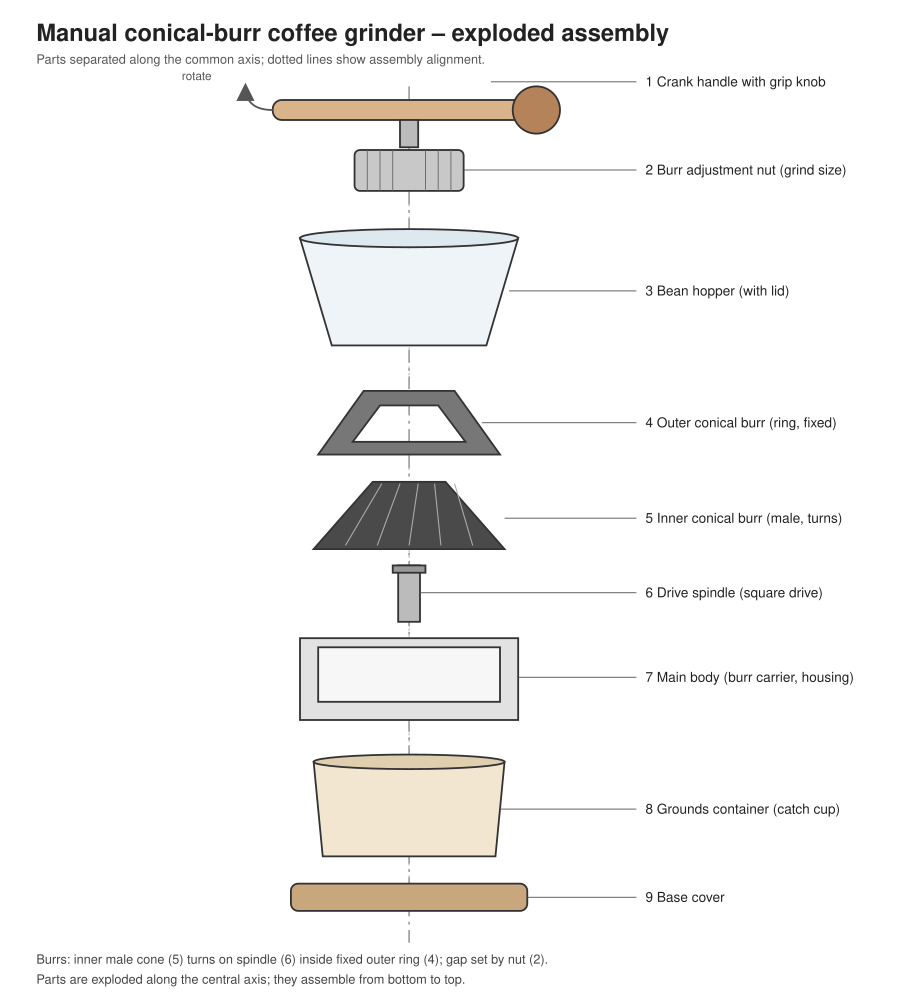
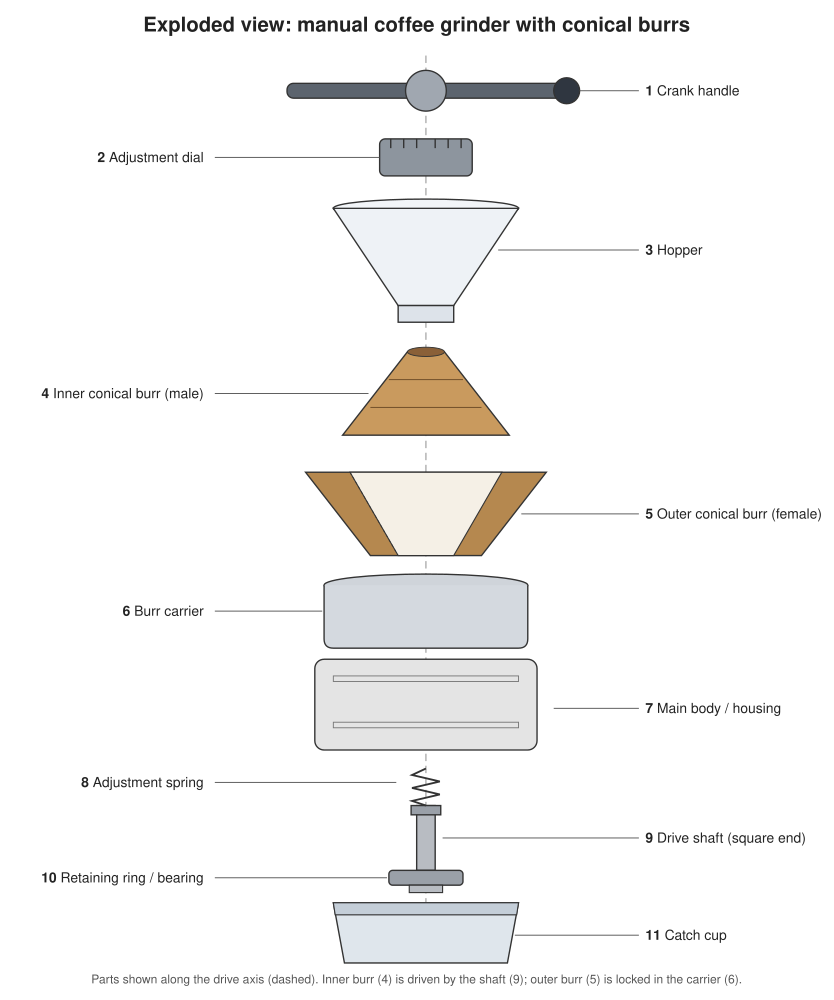
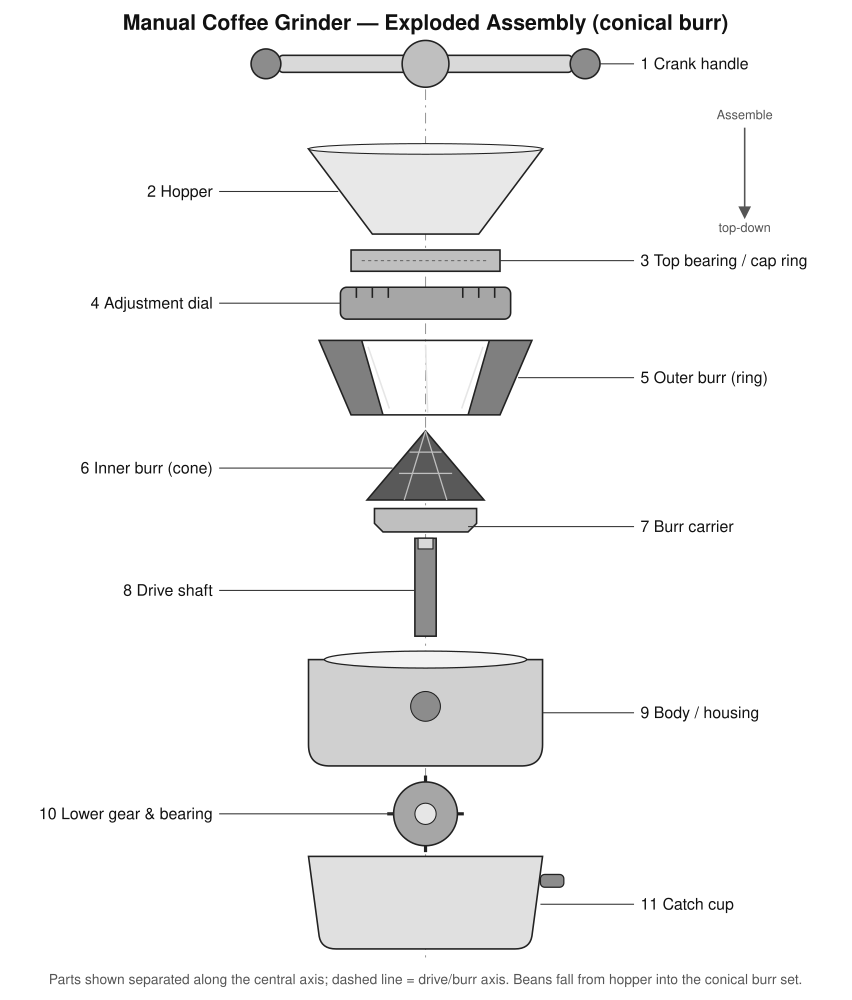
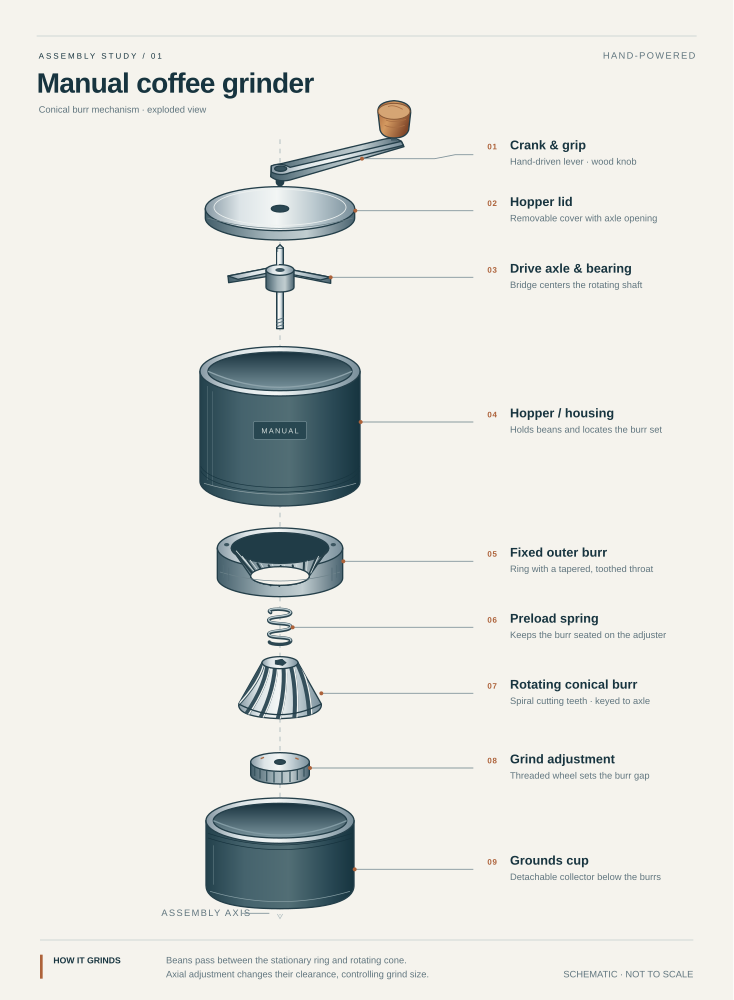
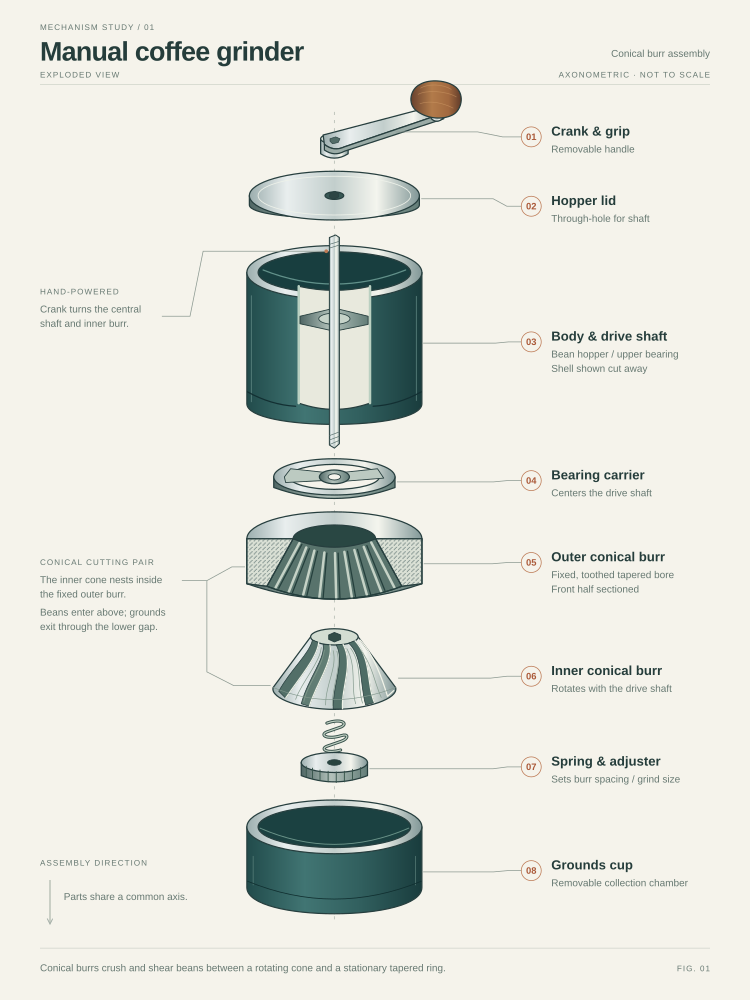
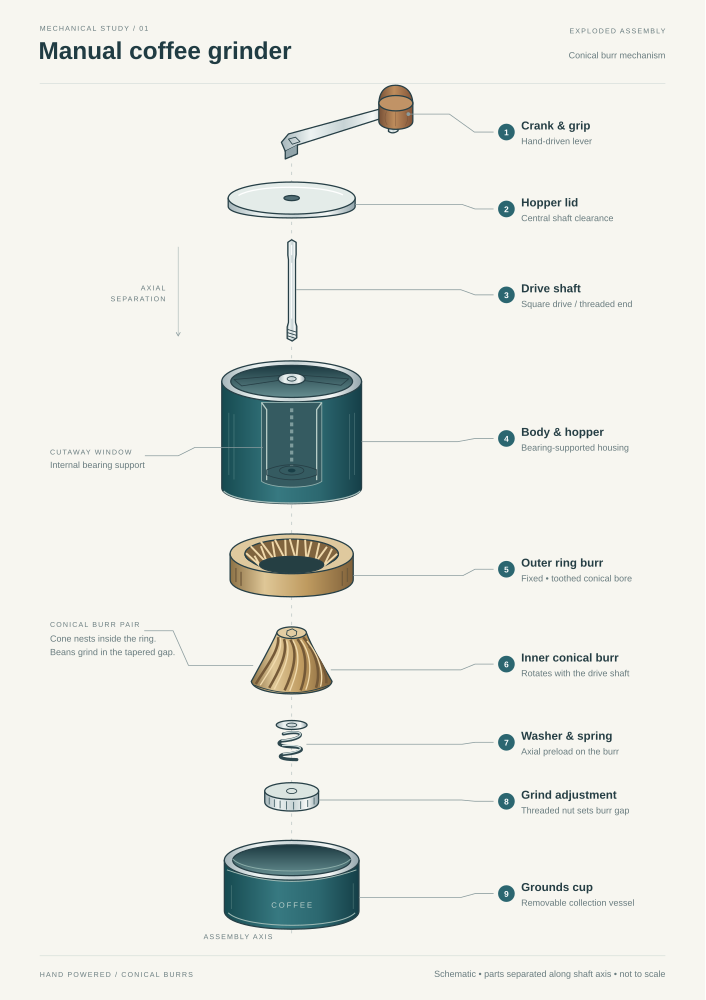
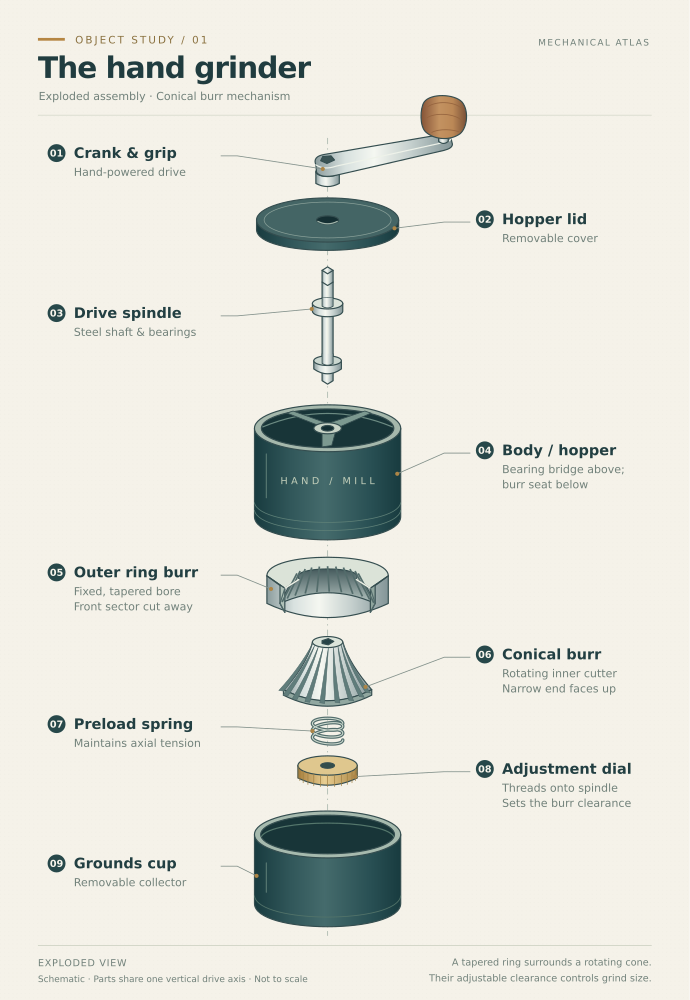
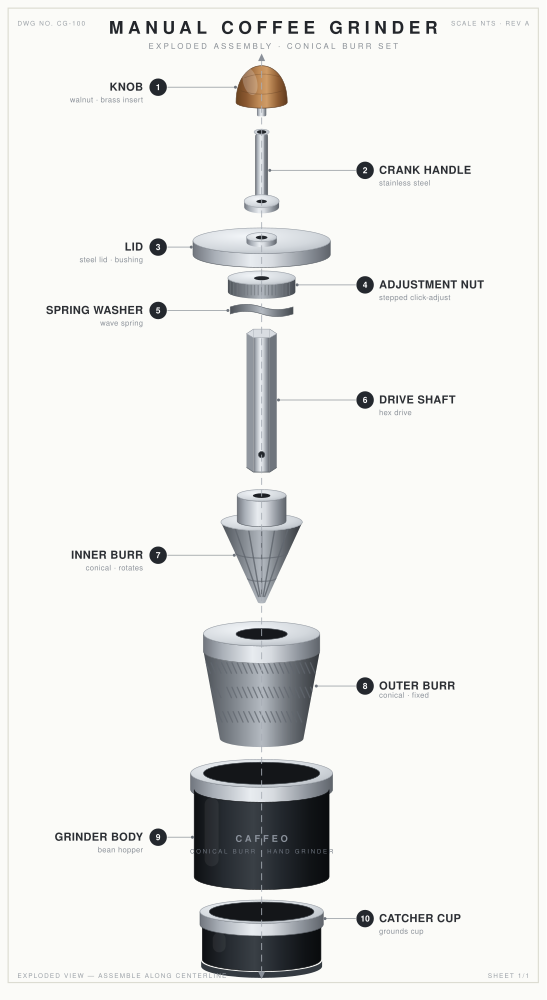
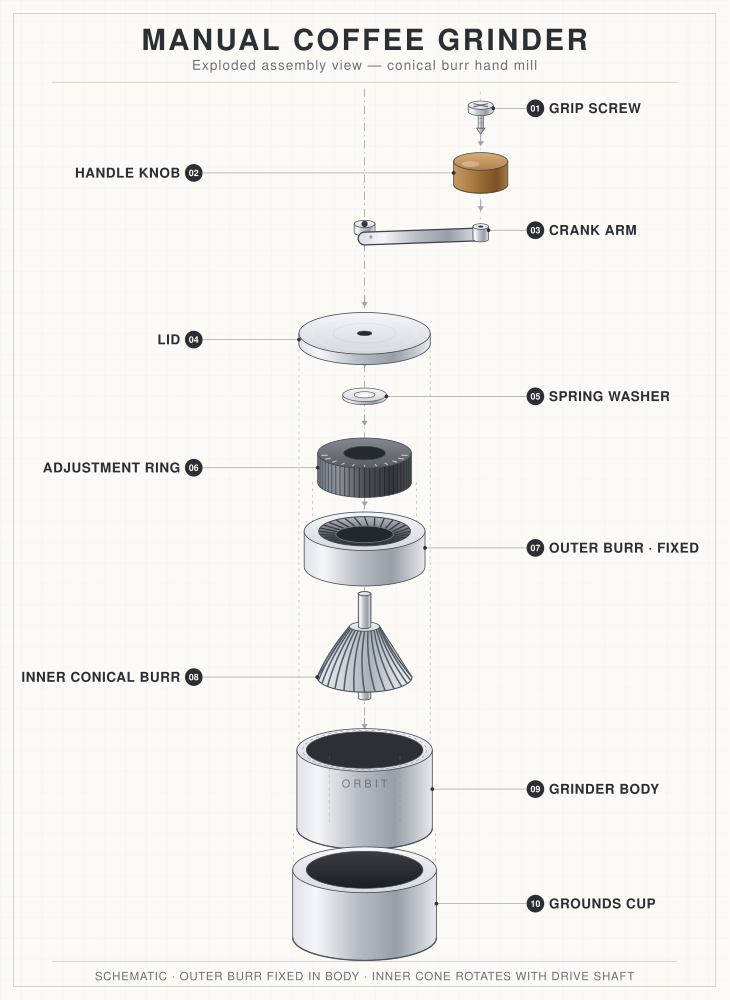
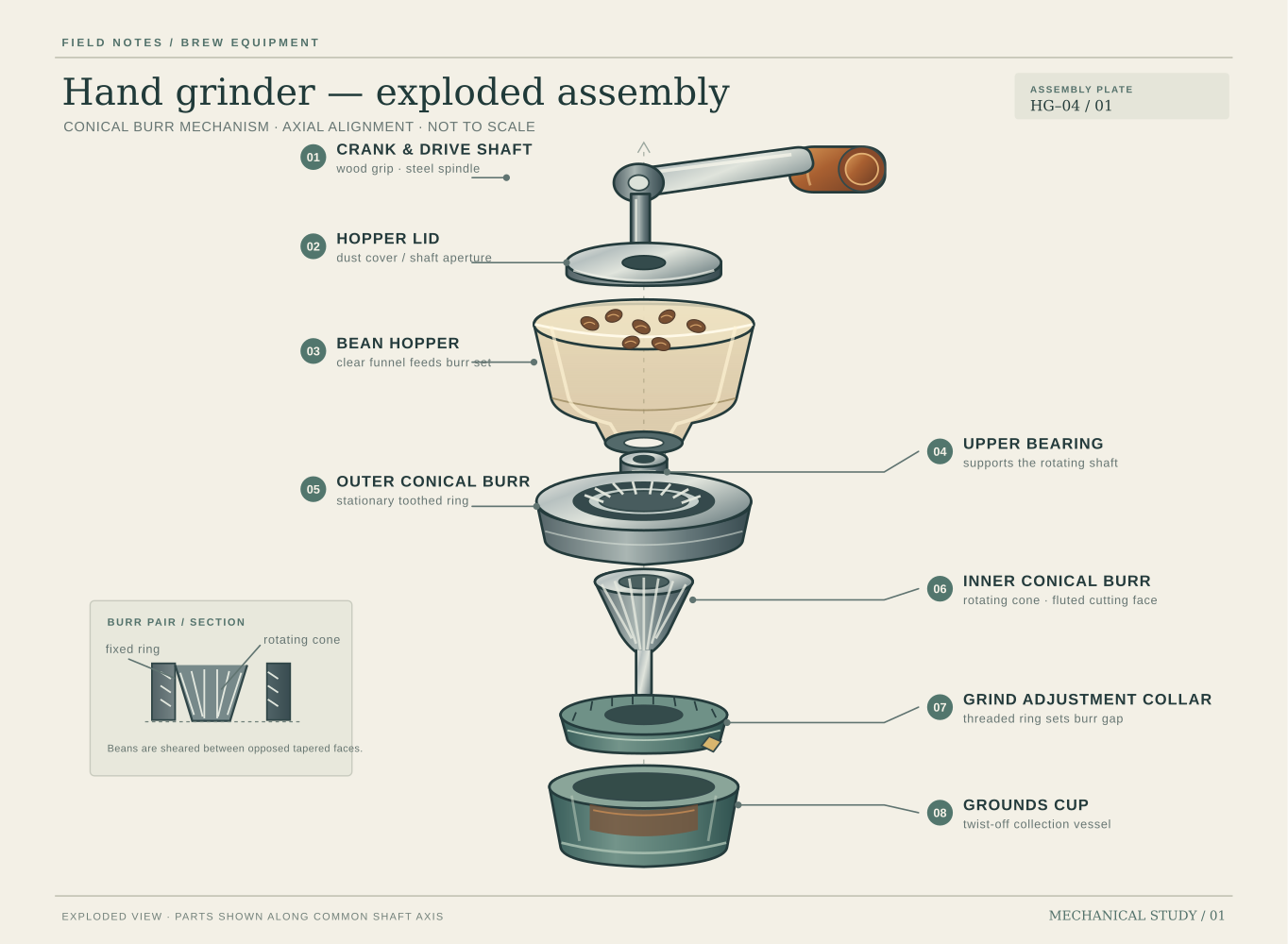
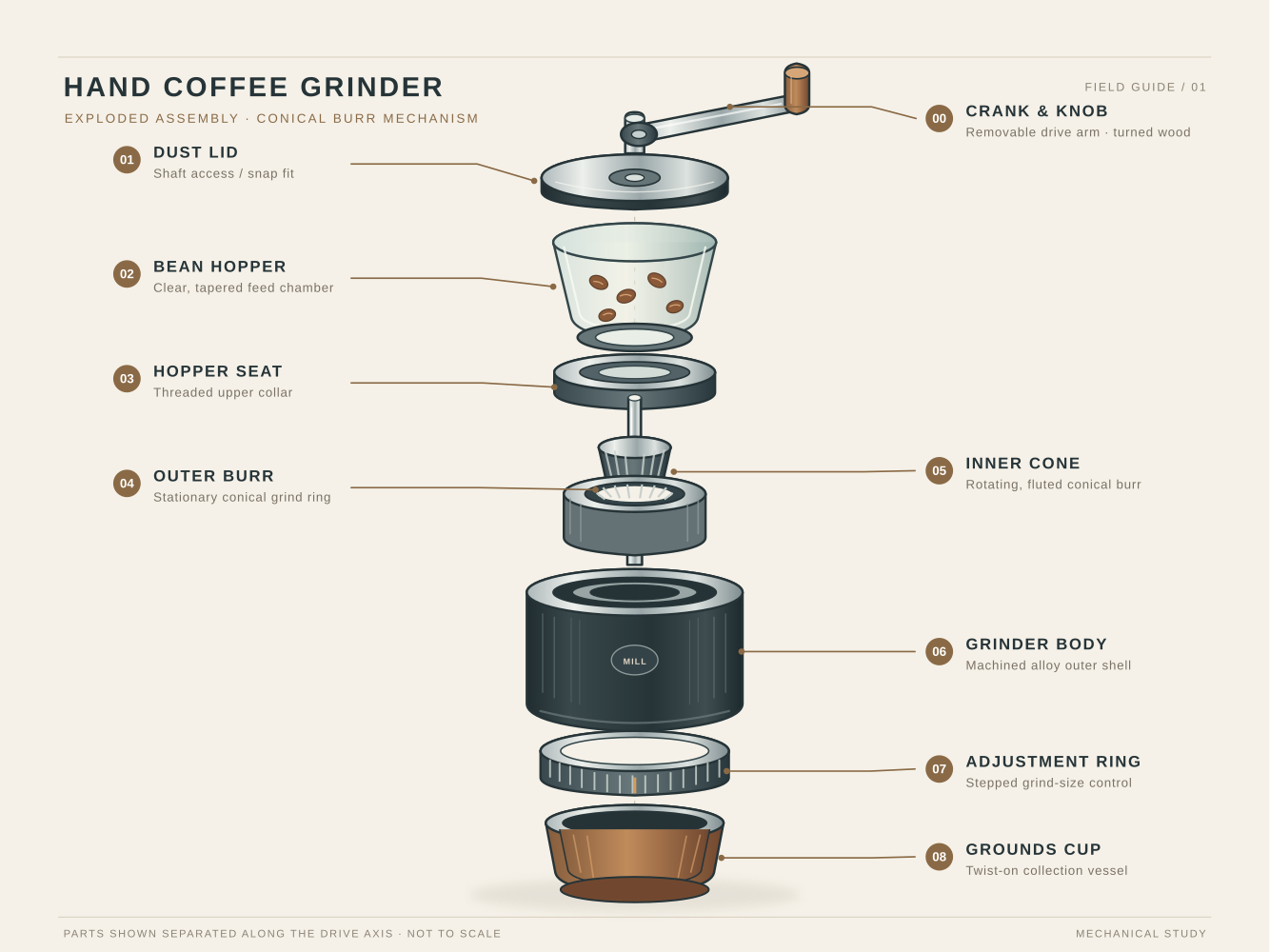
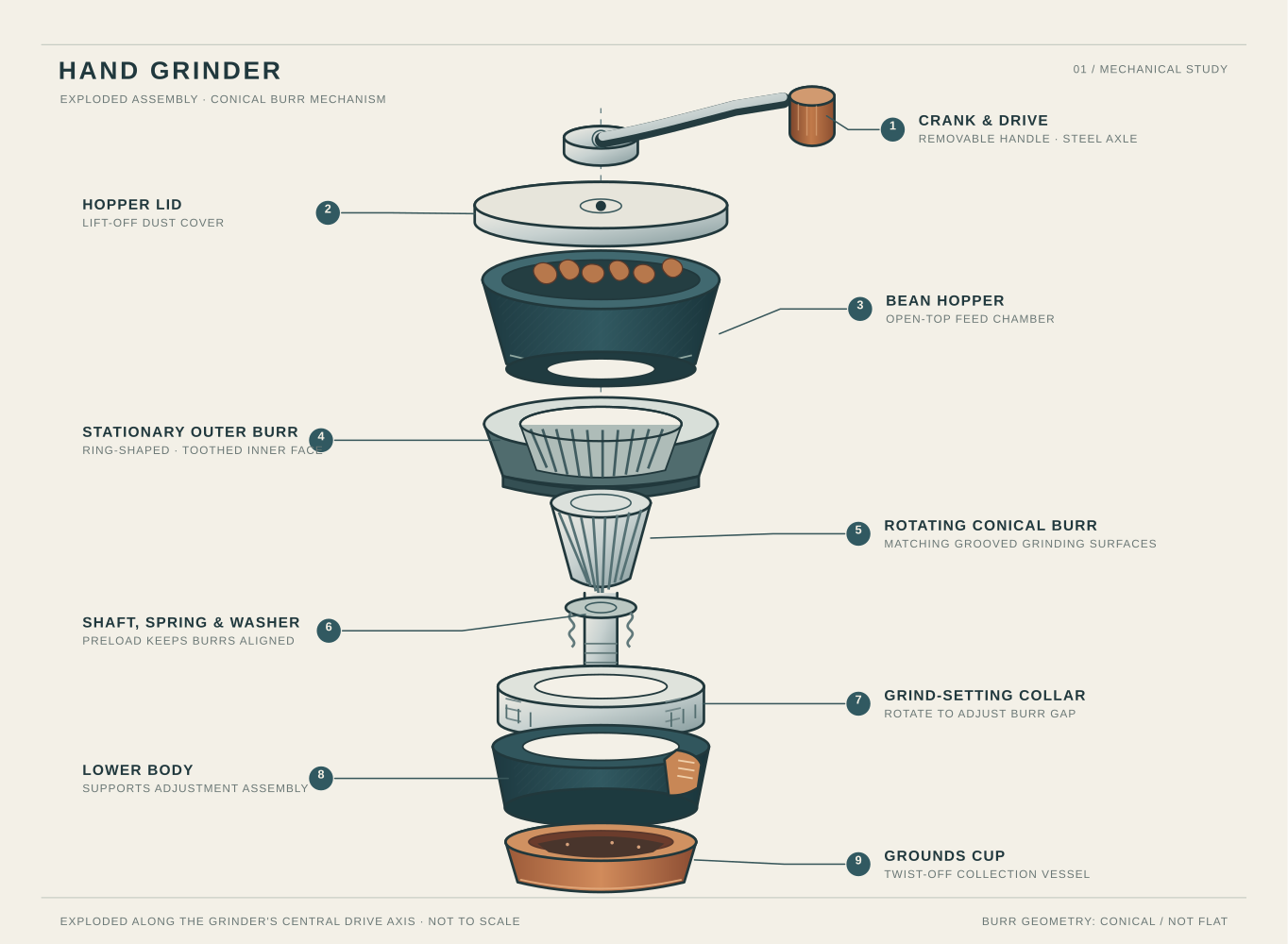
Draw an exploded assembly diagram of a manual coffee grinder, as an SVG. Use a hand grinder with conical burrs rather than flat burrs.
Every model, its first three runs.
One square a check, in this order:
- All eight parts
- Stack order
- Parts fit
- One assembly axis
- Labels match
passed, failed, undecided. A round mark is a check I judged by eye, and a diamond one a check a model judged.
| Claude Haiku 5.5 | |||
| GPT-6.1 Sol | |||
| Pareto 26.10 Preview | |||
| GPT-6 Luna |
What a run cost, against checks passed.
One dot a model, over its three runs above. Further right costs more. The gap from $0.01 to $0.1 is as wide as the gap from $0.1 to $1, so the cheap models are not squeezed into a corner.
How it is checked
Top to bottom: handle knob, crank, body, outer burr, inner burr, spring if drawn, adjustment dial, catch jar. The drive shaft runs through the body and both burrs, so it is left out of the order, the way the French press leaves out its rod. The adjustment is at the bottom, below the burrs, and the inner cone comes out downwards through the fixed outer ring. Checked against Comandante's FAQ for the C40, Coffeegeek on the Timemore C2, Hario's spare-parts list and a review for the Skerton Pro, and a guide to the Porlex Mini. The Skerton has no spring, so the spring is not required.
A check decided by eye carries the rule I apply to it. I wrote those rules down on 21 September 2026, after the first results were scored, so for those results they record how I made the calls after the fact.
When this saturates: Draw the burrs in section with the gap set for espresso, so the cone and the ring have to be the right shapes as well as the right sizes.
Failures seen here: incomplete (fails when the model leaves out something the brief asked for); false (fails when the model gets a fact wrong, such as a part in the wrong place or at the wrong size). The same kinds across every task.
The rules behind all of thisThis task's prompt, checks and any checker, on GitHub