Gallery, prompt v1
A knitting chart for a coffee-bean cup cosy
One frozen prompt and every model that has run it, newest first.
The prompt, v1, frozen
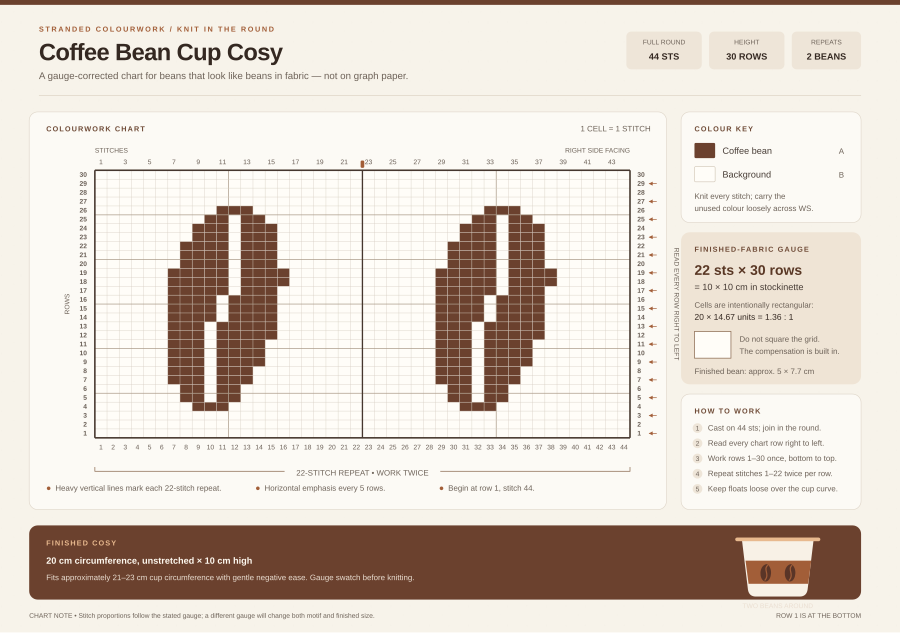
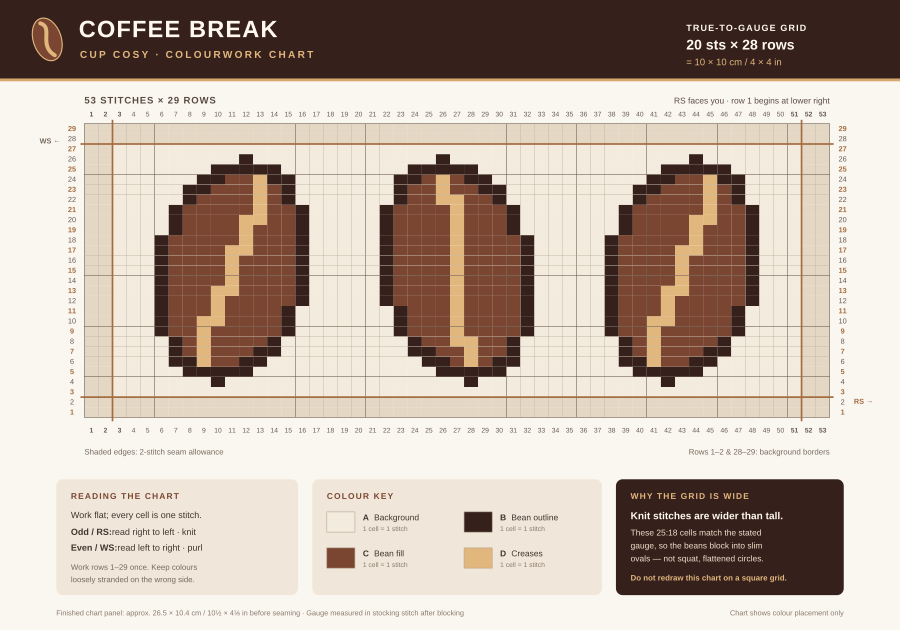
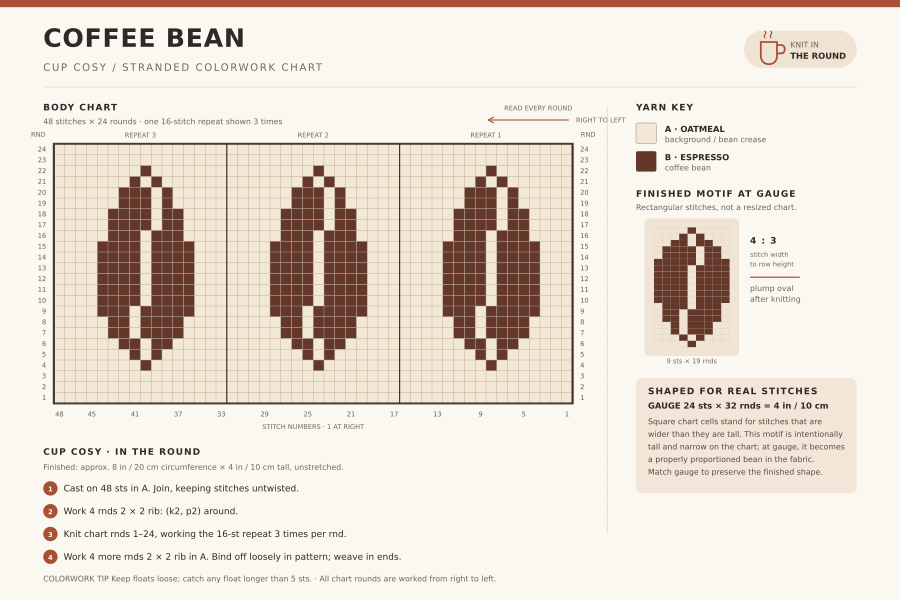
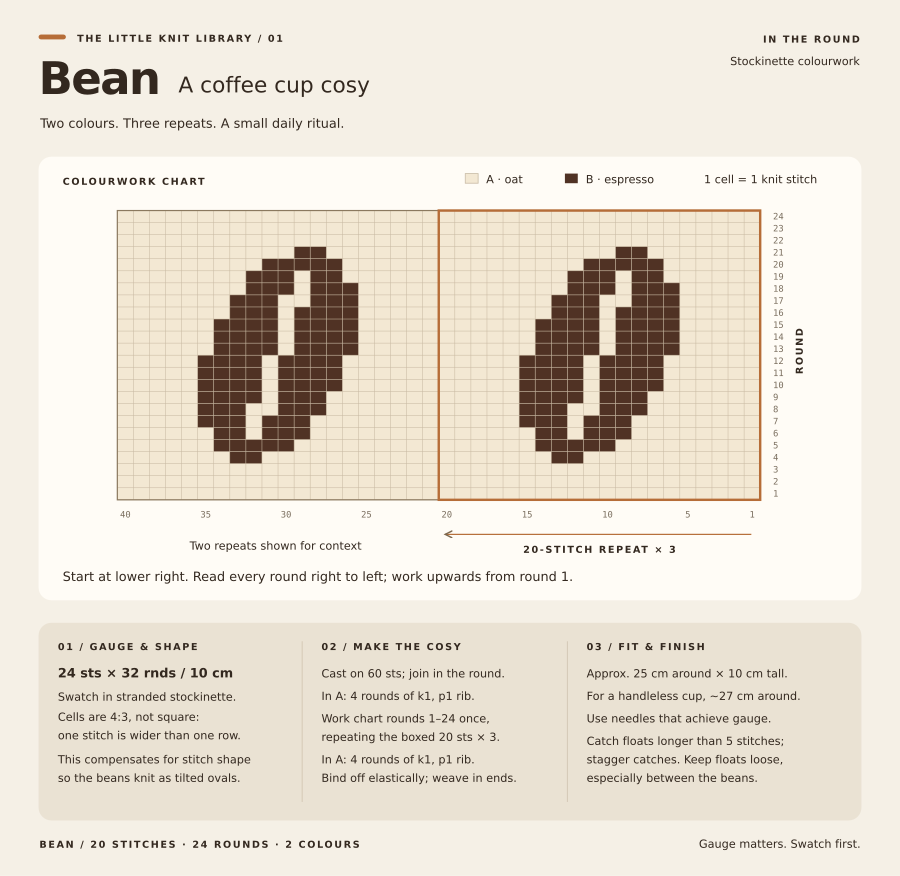
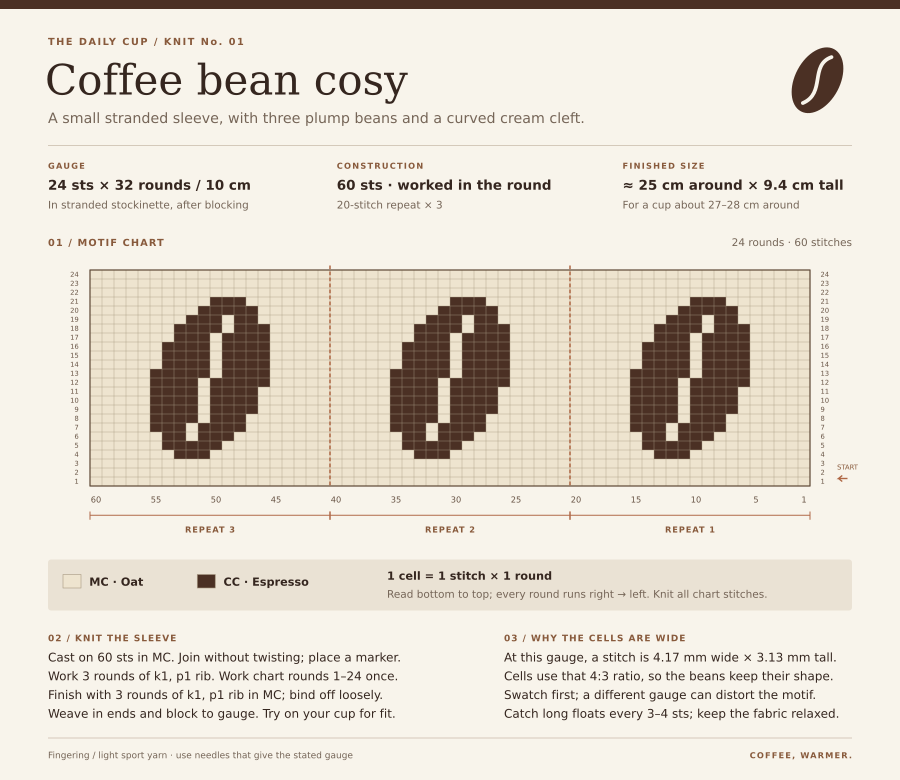
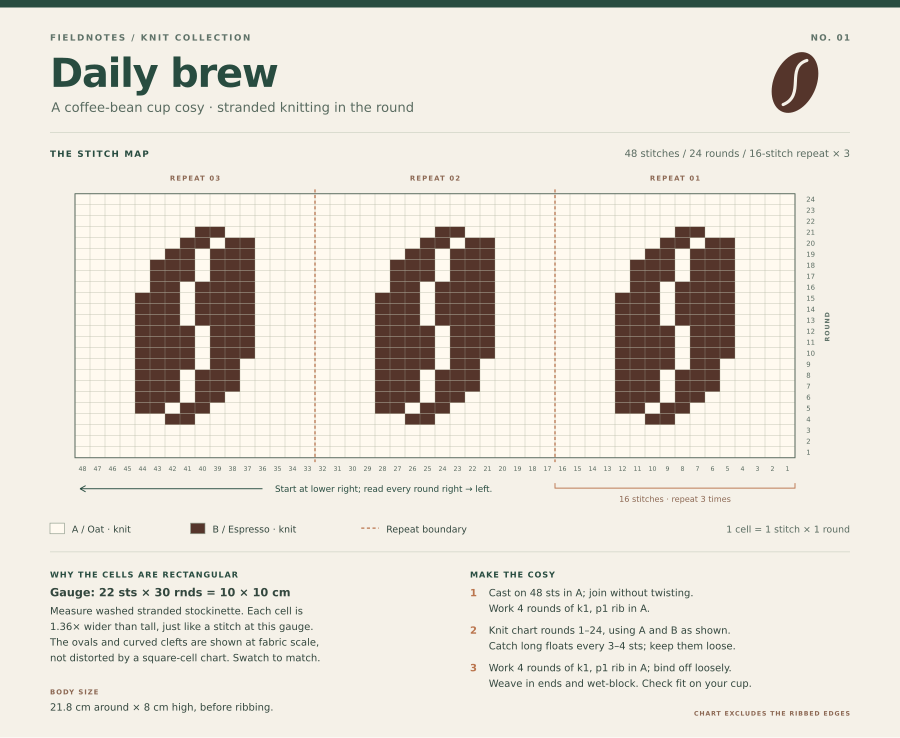
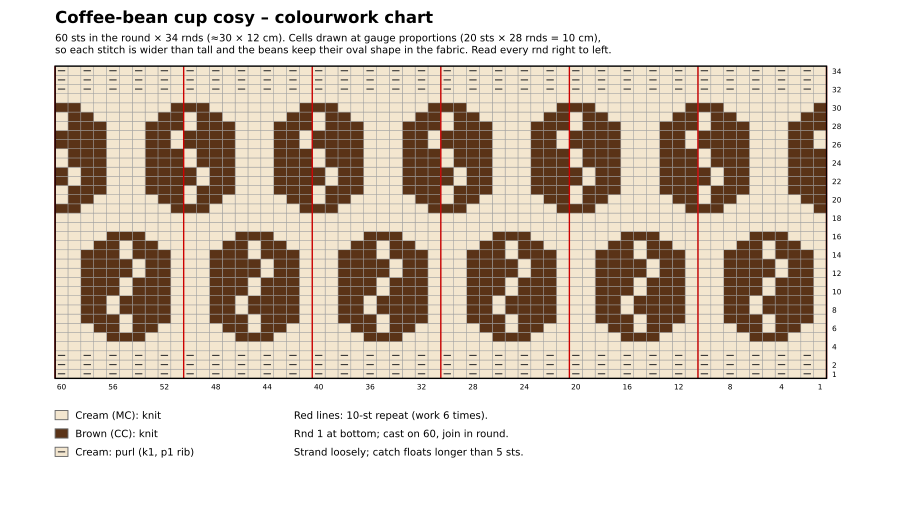
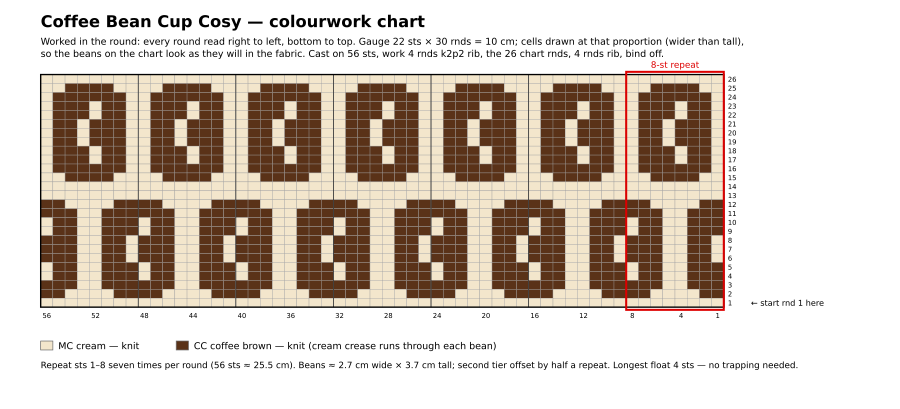
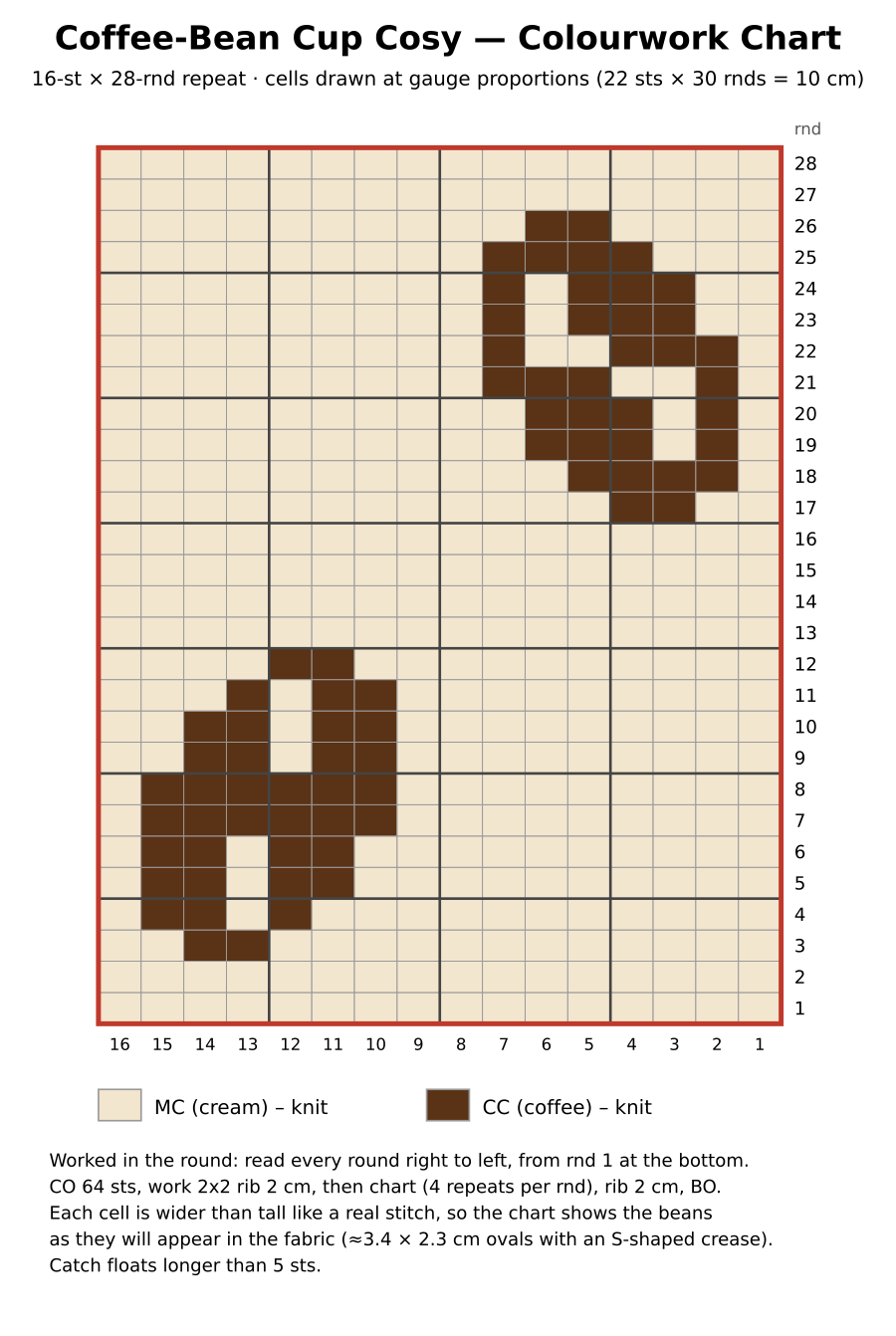
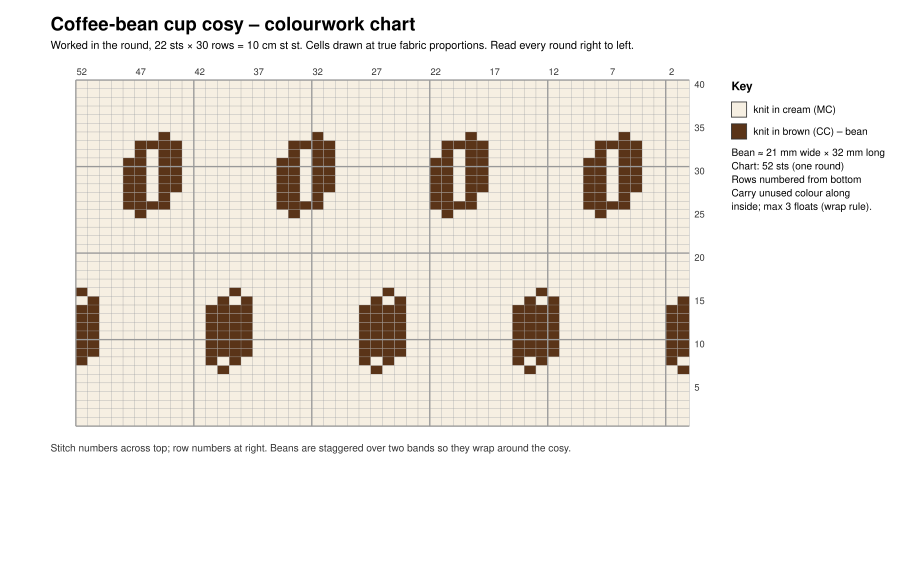
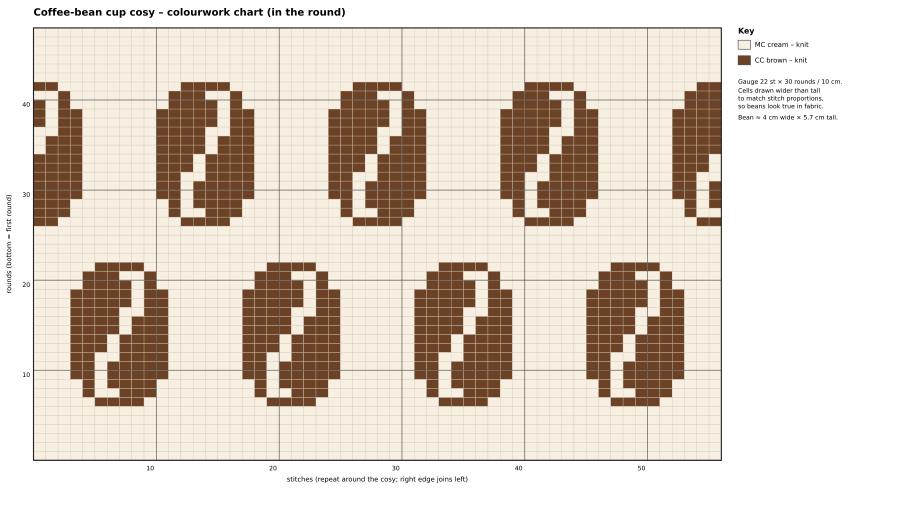
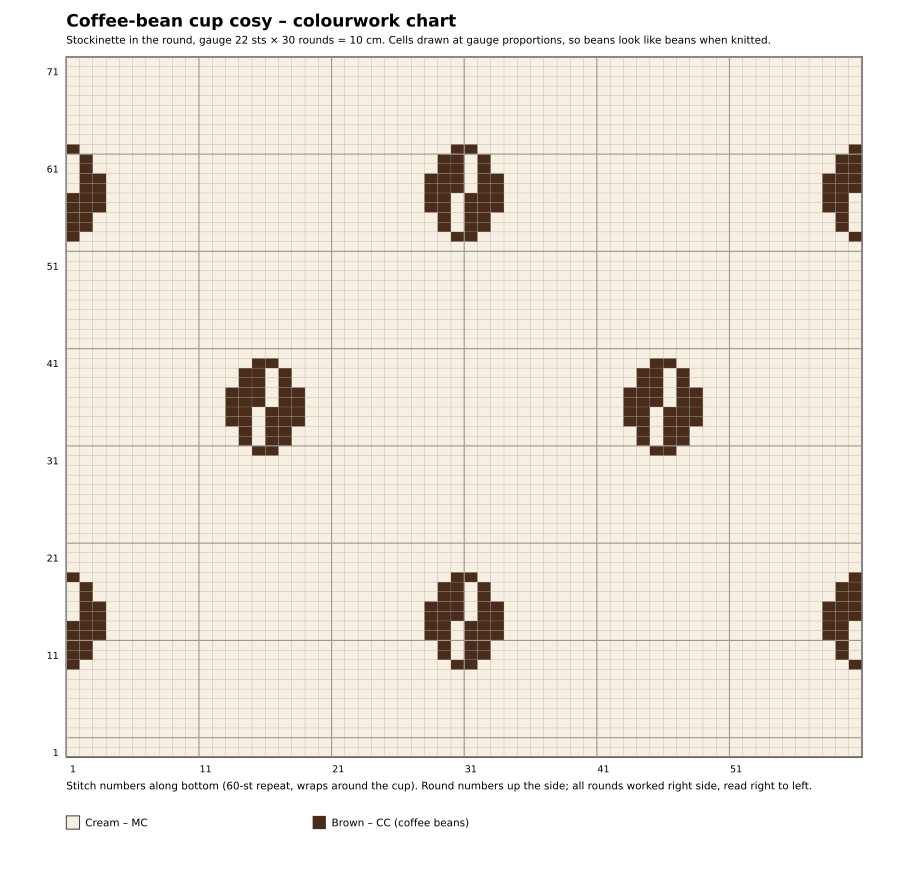
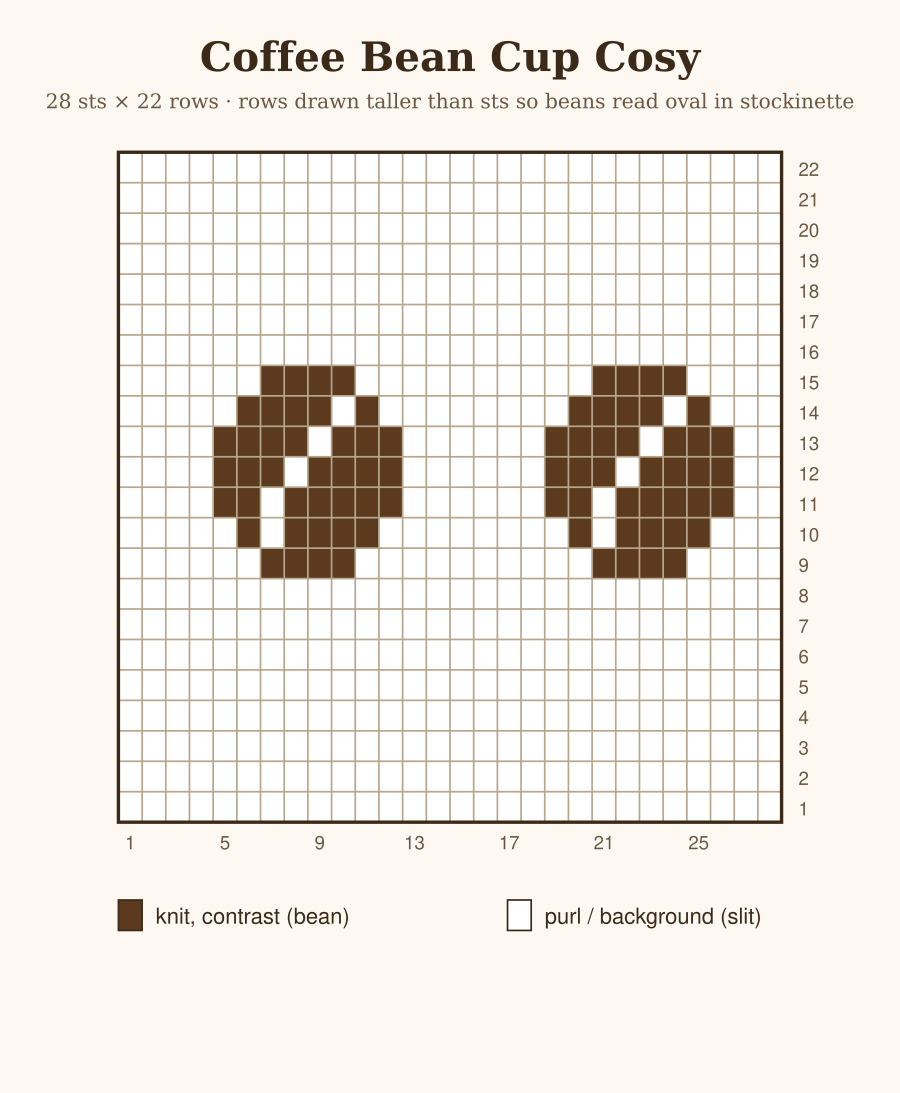
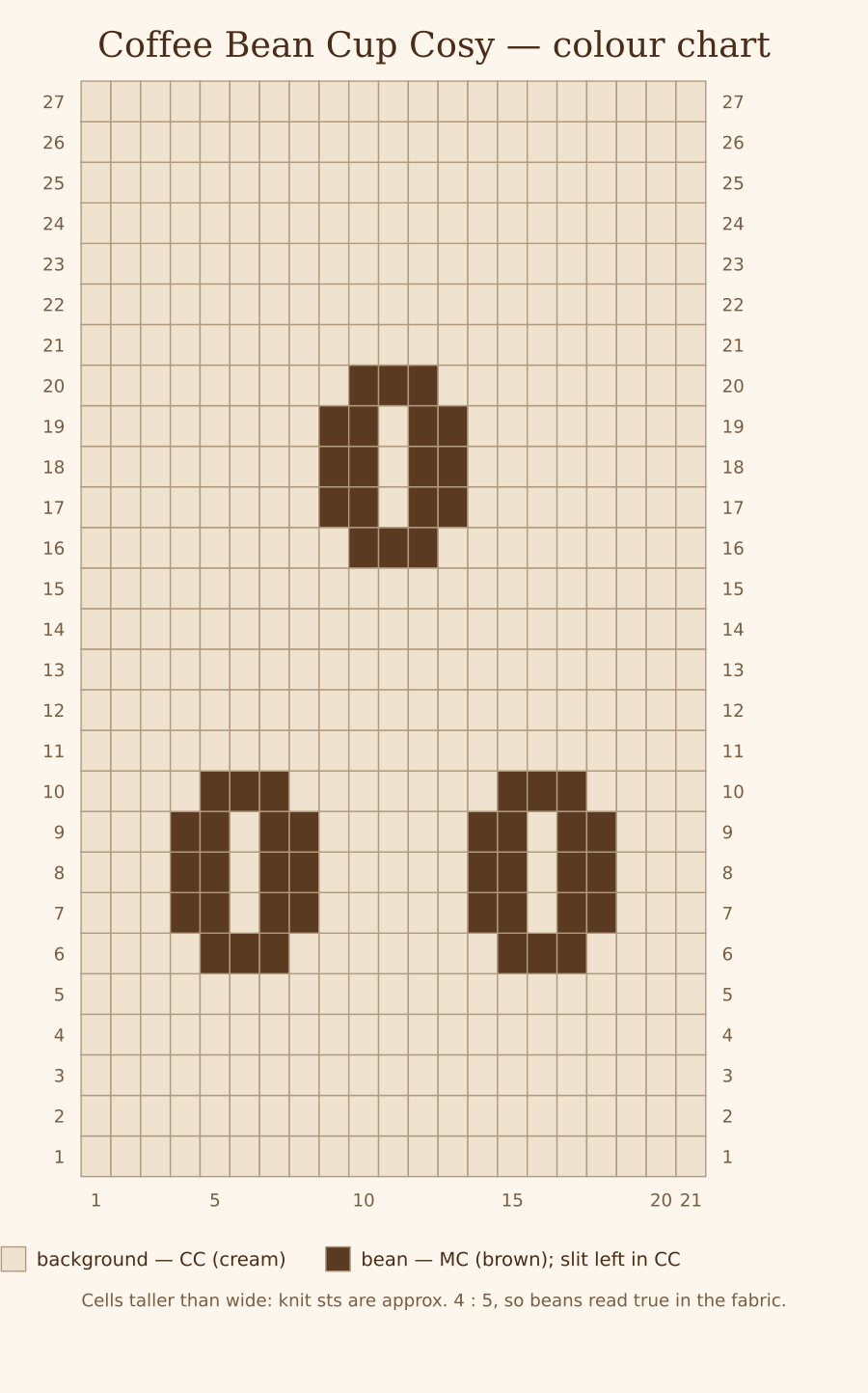
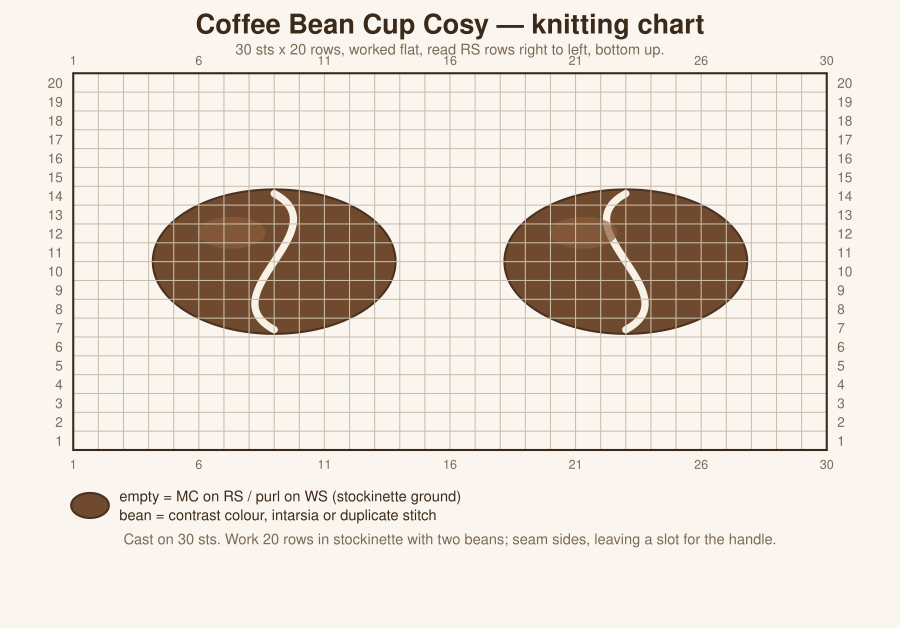
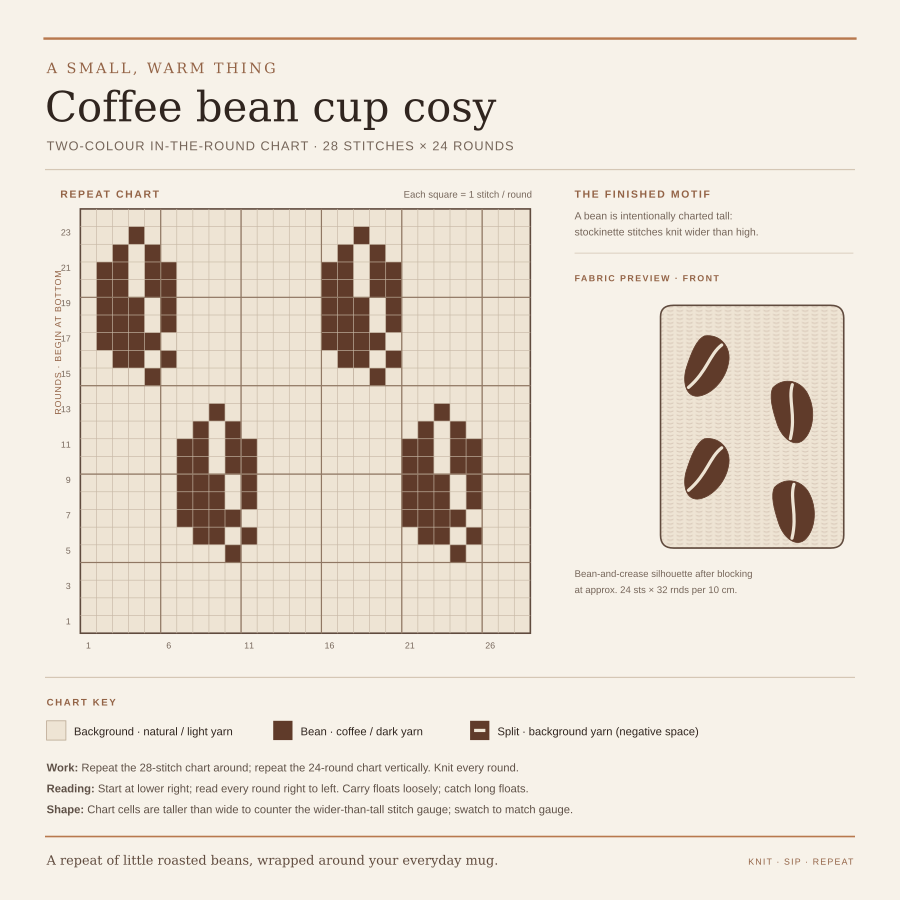
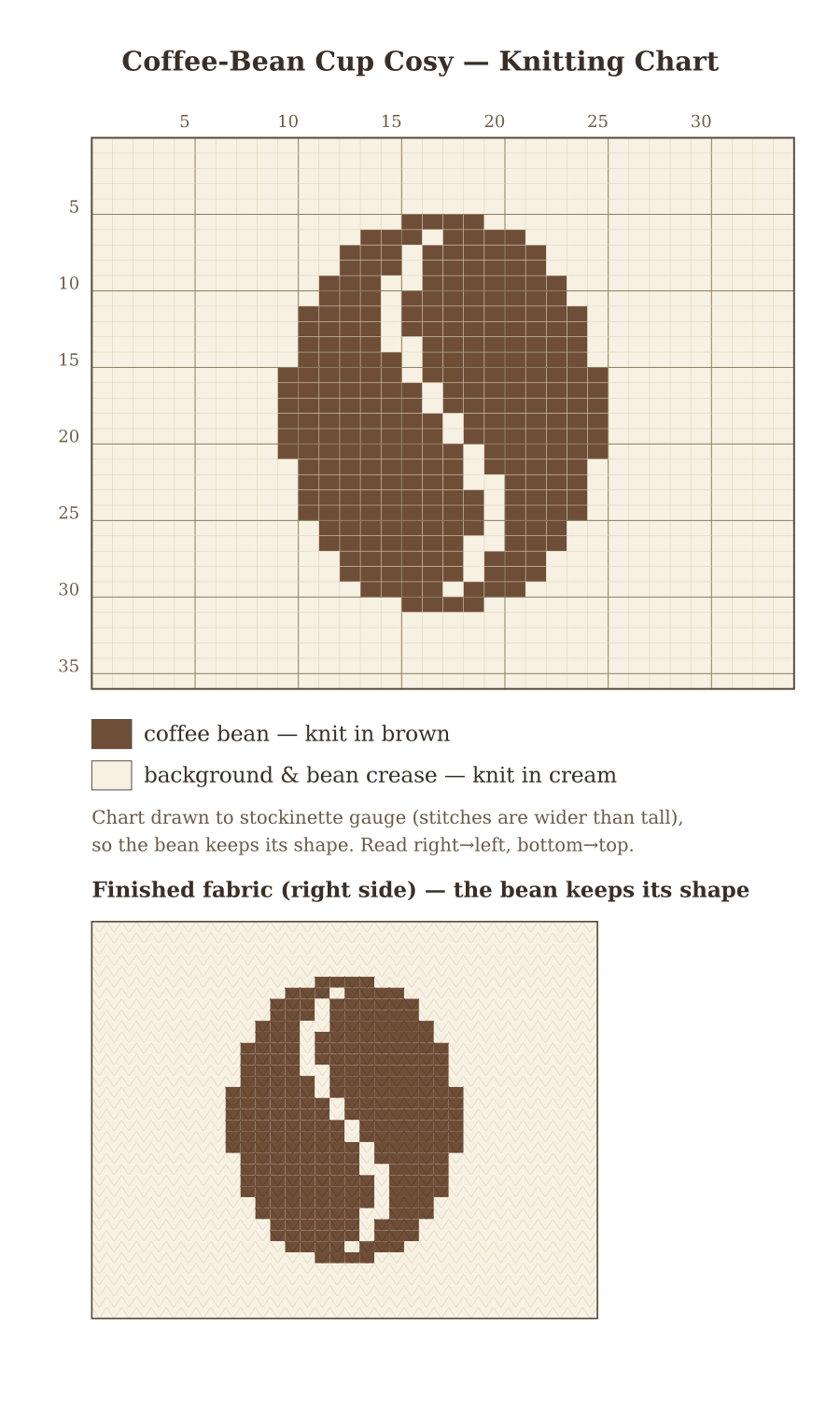
Make an SVG knitting chart for a cup cosy with a coffee-bean motif, drawn so the beans come out the right shape in the finished fabric.
Every model, its first three runs.
One square a check, in this order:
- A real chart
- Stitches wider than tall
- Bean knits true
- Has a key
passed, failed, undecided. A round mark is a check I judged by eye, and a diamond one a check a model judged.
| Kimi K3.1 Pro | |||
| GPT-6.1 Sol | |||
| Opus 5.5 | |||
| Claude Haiku 5.5 | |||
| GLM 5.3 FlashX | |||
| GPT-6 Luna | |||
| DeepSeek 4.1 Flash |
What a run cost, against checks passed.
One dot a model, over its three runs above. Further right costs more. The gap from $0.01 to $0.1 is as wide as the gap from $0.1 to $1, so the cheap models are not squeezed into a corner.
How it is checked
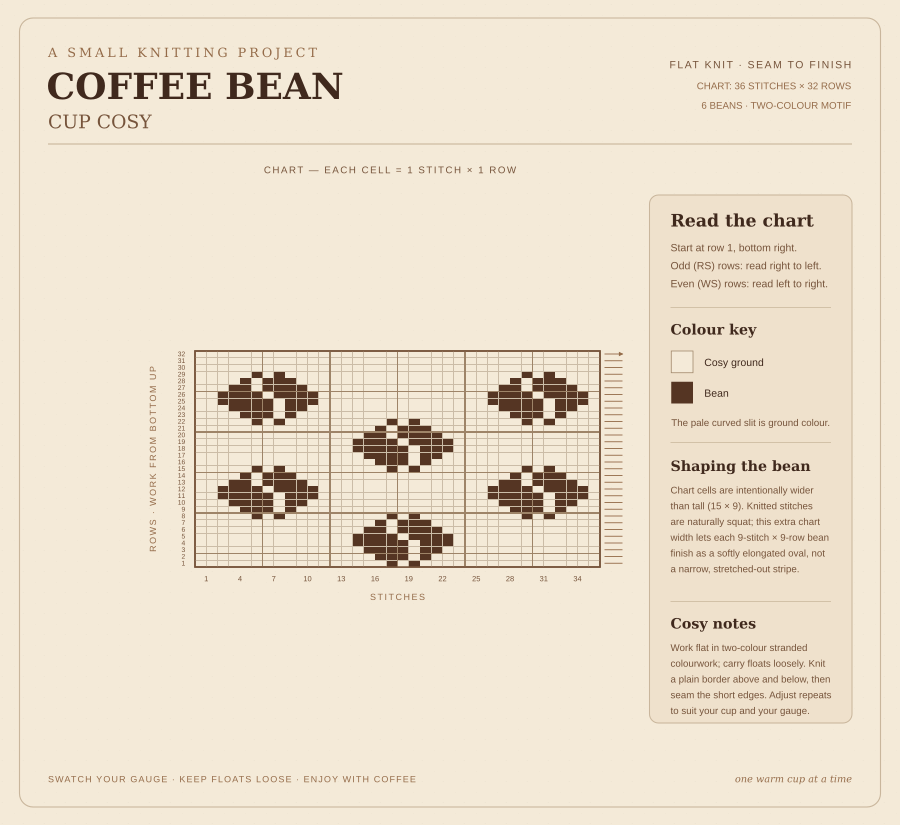
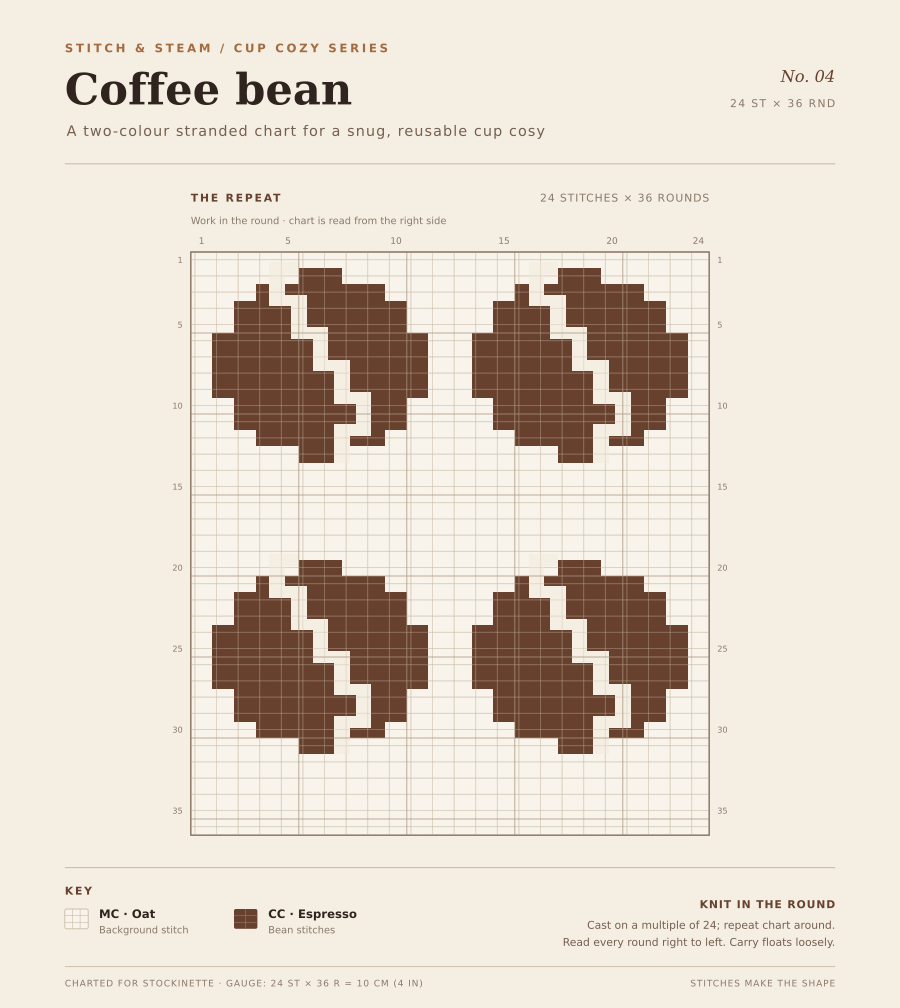
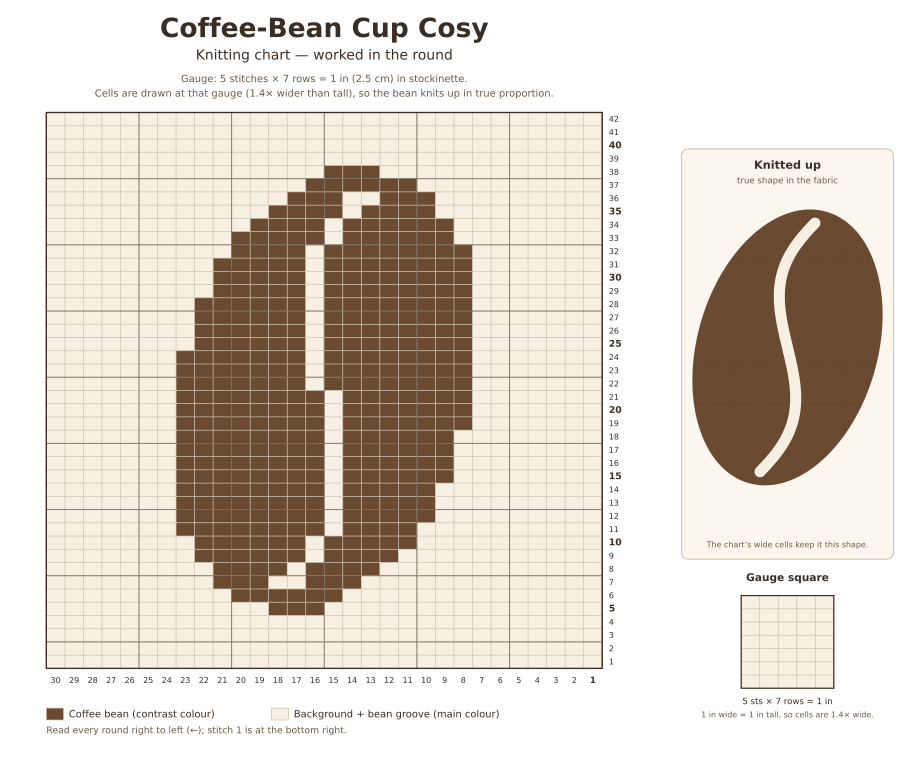
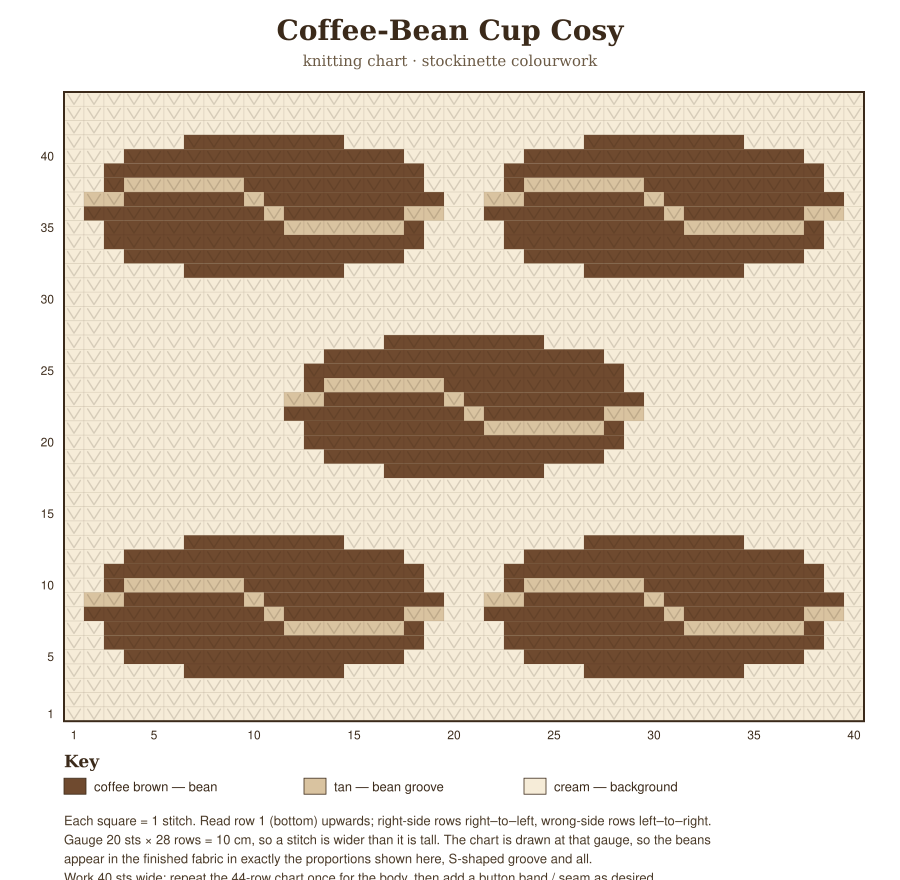
A knit stitch is wider than it is tall, about 5 stitches to 7 rows over the same distance, so a bean drawn on square cells knits up squashed. The chart is read from the SVG: its grid, which cells are coloured, and the gauge its cells are drawn at. Each bean is then measured as it would come out in the fabric, from its stitches and rows at that gauge, and a coffee bean is 1.3 to 1.8 times as long as it is wide.
When this saturates: A motif that is not symmetric, such as a cup with a handle, worked flat, so the chart also has to be read in both directions.
Failures seen here: false (fails when the model gets a fact wrong, such as a part in the wrong place or at the wrong size); malformed (fails when the model's file won't open: it doesn't compile, parse or render). The same kinds across every task.
The rules behind all of thisThis task's prompt, checks and any checker, on GitHub