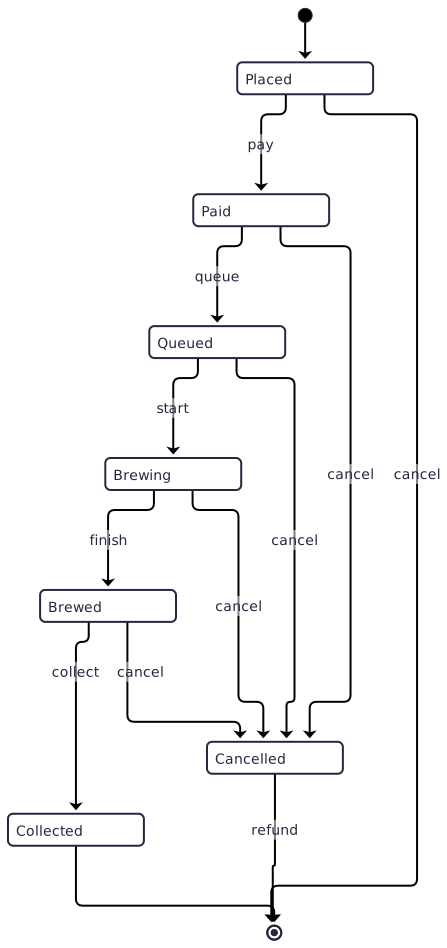
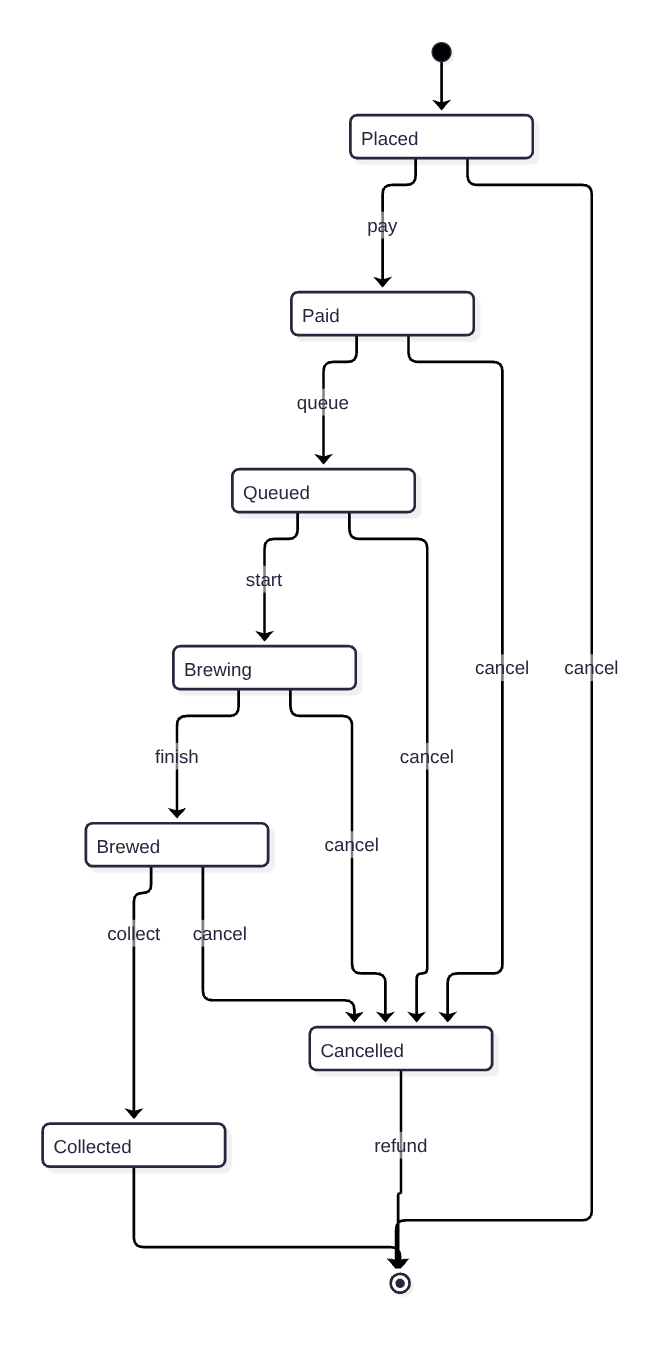
order.mmd · 16 lines
stateDiagram-v2
    [*] --> Placed
    Placed --> Paid : pay
    Paid --> Queued : queue
    Queued --> Brewing : start
    Brewing --> Brewed : finish
    Brewed --> Collected : collect
    Collected --> [*]

    Placed --> [*] : cancel
    Paid --> Cancelled : cancel
    Queued --> Cancelled : cancel
    Brewing --> Cancelled : cancel
    Brewed --> Cancelled : cancel
Cancelled --> [*] : refundA café order that can be cancelled: Pareto 26.10 Preview
modelunbiased/pareto-26.10-previewtaskmermaid-order-cancel@v1, checks c1, harness h1date2026-10-02rounds1 of 8 allowed, 12 minutes on the clockcost$0.0426thinkingmediumtokens10,998 in, 11,713 out, of which 0 reasoningtime1 min 12 s
Renders, labels validdecided by a number, from the filepass
Happy pathdecided by a number, from the filepass
No refund if unpaiddecided by a number, from the filepass
Refund if paiddecided by a number, from the filepass
No cancel after collectdecided by a number, from the filepass
There is no post about this one, since only some results need one, so the picture, the source and the scoring are here instead.
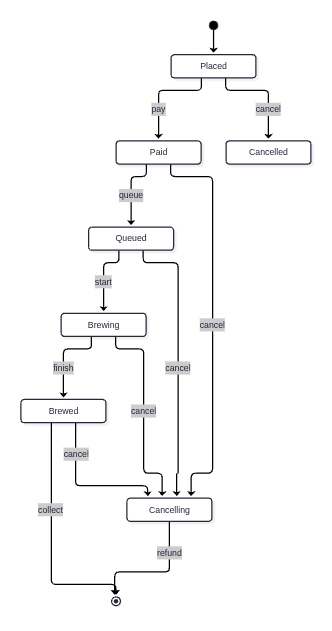 run 2 · 1r · $0.0372
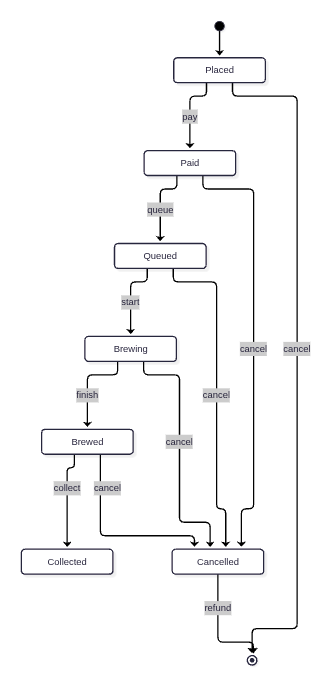 run 3 · 1r · $0.0237
same prompt, other modelsall 6 runs on A café order that can be cancelled →
Draw a Mermaid stateDiagram-v2 for a café coffee order. An order is placed, paid, queued, brewed and collected, and it can be cancelled at any point before it is collected. Money goes back only if it was taken. Label every transition with exactly one of these events: pay, queue, start, finish, collect, cancel, refund.Frozen at v1. This model got this and nothing else.
The diagram parsed into a transition table and run against fixed event sequences: the happy path, and a cancel after placing, paying, queueing, brewing and collecting. The start is the state [*] points to or, since the prompt never asks for [*], the one state nothing points into. How it is scored, and this run's files on GitHub.